The Niagara University Biomedical Research Institute is inviting high school students entering grades 10-12 to “ignite their future in STEM” at a comprehensive, week-long residential workshop. Summer STEM Camp will take place on campus from Aug. 2-8, 2026.
Hosted by Niagara University’s Biomedical Research Institute, the program is designed to fuel the future of science by offering students hands-on research opportunities alongside university faculty, researchers, and industry experts.
The curriculum is centered on the “Science of Discovery,” featuring Dr. Mary P. McCourt, an NU chemistry professor and senior scientist whose groundbreaking work in Cholestosome™ technology is advancing drug delivery research for brain tumors.
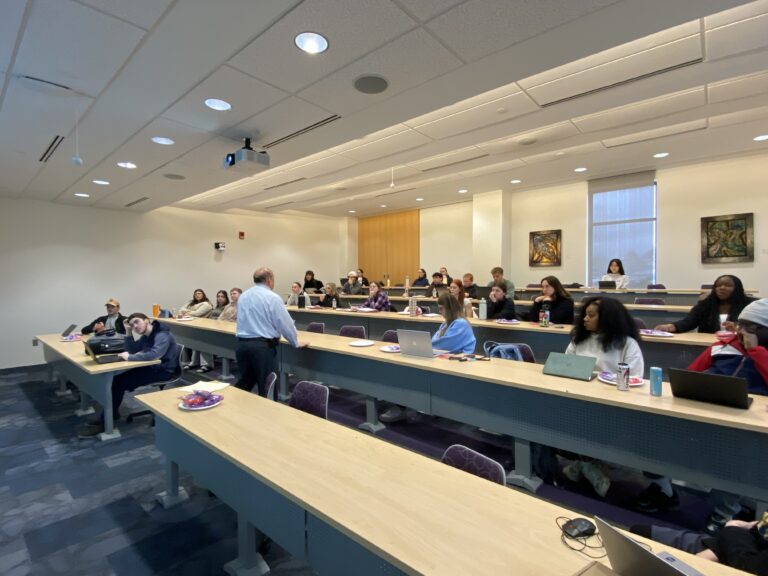
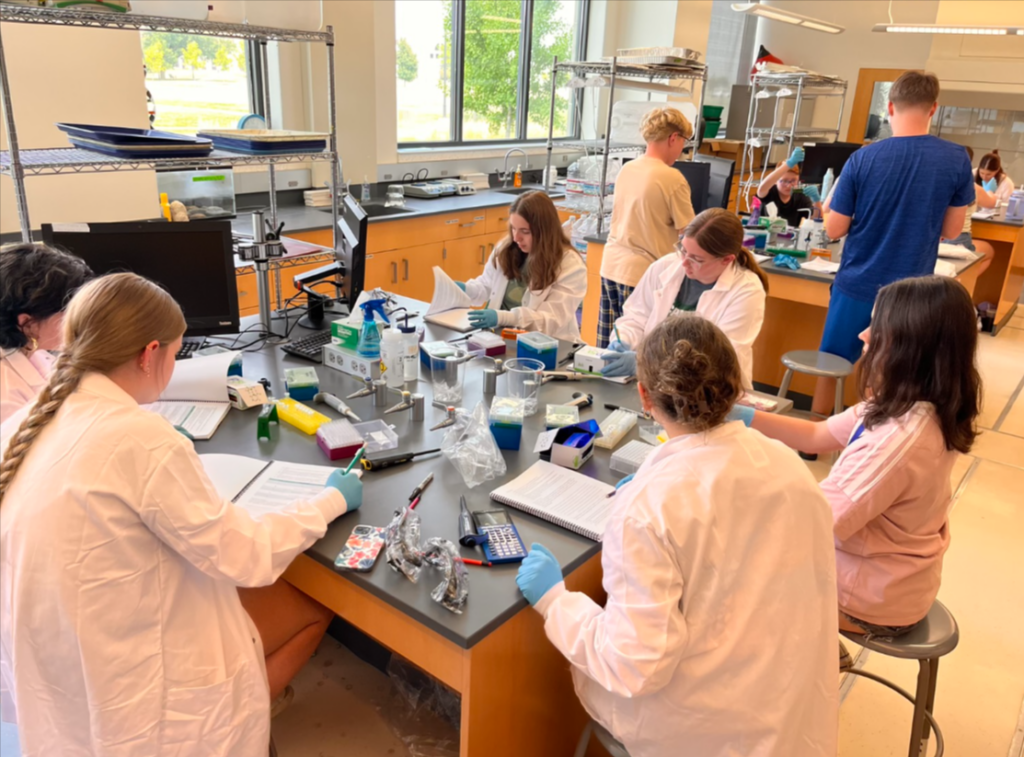
Throughout the week, students will utilize the state-of-the-art B. Thomas Golisano Center for Integrated Sciences, which houses 18 laboratories.
Highlights of the academic program include:
- Forensic Science & AI: A mini-camp guided by NU faculty where students use Python programming and AI tools to analyze real-world digital evidence.
- Neuroanatomy: A comparative brain lab led by Sandra M. Ocampos, anatomy and physiology laboratory coordinator, where students compare sheep and human brains to understand neurological adaptation.
- Microbiology: A lab-based lecture on bacteriophages – viruses that infect bacteria – and their potential as tools against antibiotic-resistant “superbugs,” led by Dr. Mark A. Gallo, a professor of biology at Niagara.
- Computational Analysis: A workshop on how coding supports scientific research, led by Hannah Attard, assistant professor of physics at Daemen University.
Beyond the classroom, students will see STEM in action through off-campus field trips. Participants will visit the Jacobs Institute in Buffalo to design and test clot-clearing devices under the guidance of Pamela Marcucci, vice president of programs. Additionally, students will explore sustainable energy at the New York Power Authority’s Niagara Power Vista and experience an immersive planetarium tour at SUNY Buffalo State University.
The residential program allows students to experience life on a college campus, developing independence while staying in apartment-style lodging. The $1,200 cost of the camp includes registration, lodging, all meals, lab supplies/coat/goggles, and field trips.
Space is limited to 35 seats. For more information, contact tober@niagara.edu.
“This was an amazing opportunity for my daughter,” said Amy T., parent of a 2025 participant. “I highly recommend anyone interested in science to take a closer look at Niagara University.”