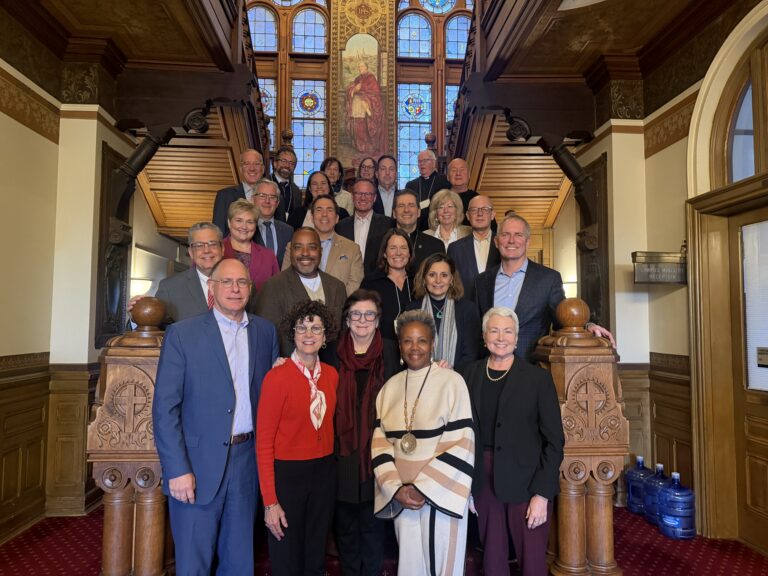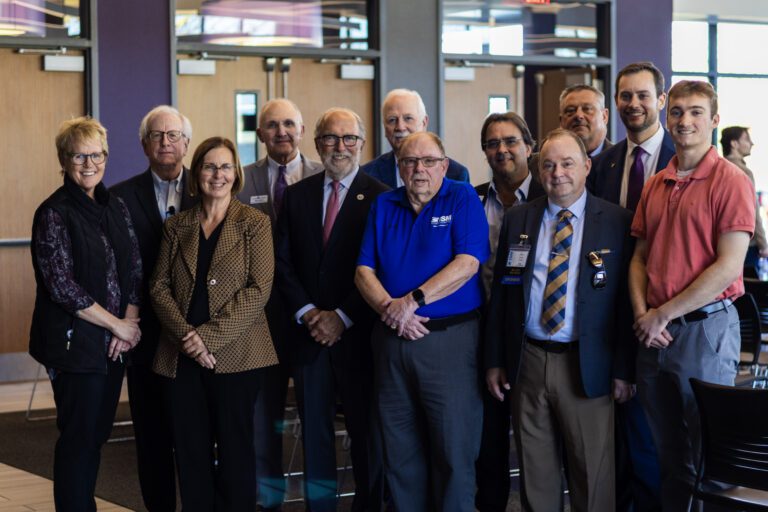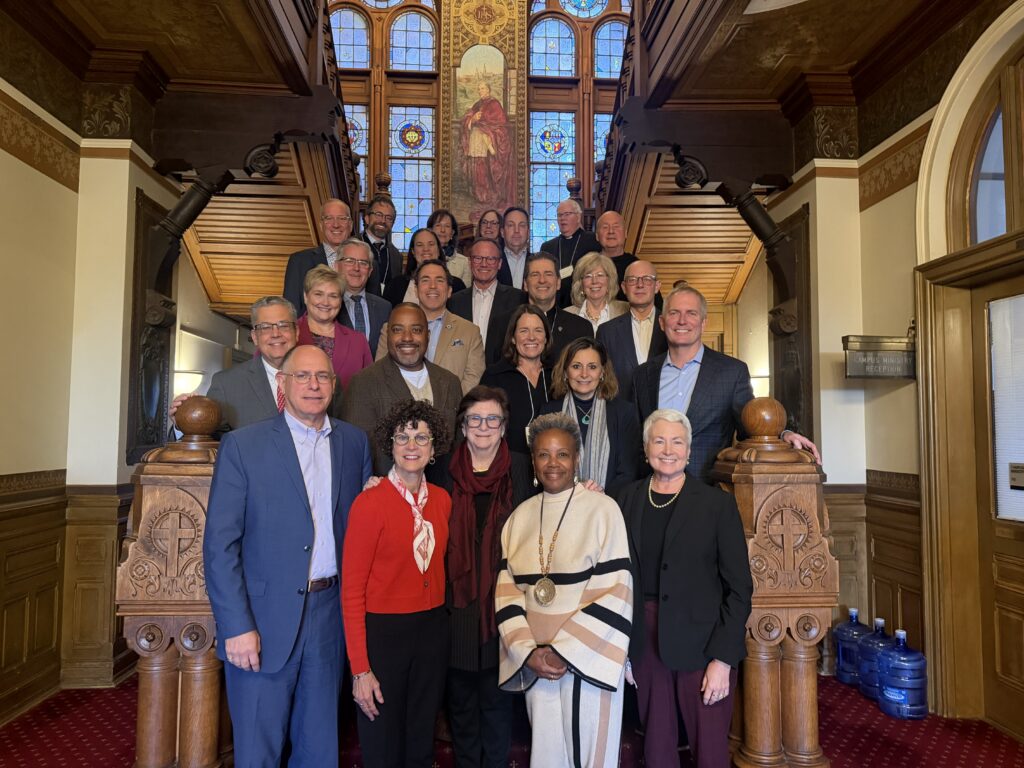
The Rev. James J. Maher, C.M., president of Niagara University, joined 18 other presidents of Catholic colleges and universities at Georgetown University in Washington, Nov. 19-20, for an invitational summit on artificial intelligence and the future of Catholic higher education.
Through facilitated discussions, the presidents shared insights about the current and anticipated impact of AI on their campuses, identified best practices, and developed strategies for how Catholic higher education can advance the teachings of Pope Leo XIV’s encyclical “Magnifica Humanitas: On Safeguarding the Human Person in the Time of Artificial Intelligence.”
The summit was co-sponsored by the Association of Catholic Colleges and Universities and Georgetown’s Initiative on Catholic Social Thought and Public Life, with financial support from Lilly Endowment Inc.
Pope Leo XIV released “Magnifica Humanitas,” the first encyclical of his papacy, on May 25. The letter calls for technology to serve the dignity of the human person and the common good. The pope signed it on the 135th anniversary of Pope Leo XIII’s “Rerum Novarum,” the 1891 encyclical that guided the church’s response to the Industrial Revolution.
A central focus of the summit was Catholic social teaching as an ethical framework for the use of AI. Conversations explored how colleges can teach students to use AI as a valuable tool that requires moral vigilance, while protecting the face-to-face relationships and the “culture of encounter” at the heart of Catholic campus life.
“Pope Leo has challenged all of us to keep the human person at the center of this technological moment, and Catholic universities are uniquely positioned to answer that call,” Father Maher said. “As a Vincentian university, Niagara is committed to preparing students who use these tools with skill and wisdom, and who never lose sight of the dignity of every person they serve. I’m grateful to have learned alongside my fellow presidents, and I look forward to bringing these conversations home to our campus community.”
The summit builds on Father Maher’s ongoing engagement with these questions. In a Sept. 25 essay for NU News, he wrote that “the real question is whether we will shape artificial intelligence according to the values that uphold human dignity,” and he argued that Catholic universities must prepare graduates with the wisdom, moral judgment, and compassion to use new technologies responsibly. In June, he joined about 20 Catholic higher education leaders at a weeklong seminar in Vatican City on the future of Catholic colleges, where he had a private audience with Pope Leo XIV. Niagara is also putting these principles into practice. In August, the university launched its School of Cybersecurity within the Holzschuh College of Business Administration to deepen the integration of artificial intelligence, cybersecurity, and emerging technologies throughout the business curriculum. The school is home to Niagara’s Master of Science in cyber defense, and the National Security Agency has designated NU a Center of Academic Excellence in Cyber Defense.